Emperor Designs · Cupa Ars — Wine Barrel Furniture
Cupa Ars · Emperor Designs · Creative Cooper · Poland

Furniture from wine barrels
A 2000-year-old route

From the Gaulish primeval forests to the Roman imperial table. From the Amber Road to the workshop in Poland. Every barrel carries a story centuries older than the piece of furniture you bring home today.

View the collection

How the Cupa changed the world

The Romans were masters of the amphora — the terracotta jar with which they transported wine, olive oil and garum across the entire Mediterranean. Strong, reliable and available everywhere. But when Caesar conquered Gaul, his soldiers discovered something that would change the Roman world forever.

The Gauls transported beer in oak barrels. Less fragile than the amphora. Easier to stack. Easier to roll. The Romans adopted the technology and began storing their wine in these barrels. And then they discovered something they had never expected: wine aged better in oak.

The Cupa — Latin for barrel — gradually replaced the amphora as the standard storage vessel of the Empire. A revolution born from curiosity. A tradition born from discovery.

"It was not the Romans who invented the barrel. It was the Gauls who taught them that oak does not merely preserve wine — it improves it."
The Gaulish legacy of the Cupa · Rome, 1st century BC
The ancient route of amber and oak

The finest and most coveted amber in the world came from the shores of the Baltic Sea — present-day Poland. Germanic and Baltic tribes gathered this 'gold of the north' that washed up on the beaches. To bring it to Rome, a complex network of trade routes developed across Europe.

This was the Amber Road — the most important economic lifeline between Rome and the northern 'barbarians'. But amber was only the glamour product. Along the same route flowed timber, hides and barrels from the deep primeval forests of the north to the Roman frontier legions.

The Roman writer Tacitus described in his work Germania the dense primeval forests of present-day Poland as a land of "spine-chilling forests". Those forests supplied the powerful, slow-grown timber that the Roman legions needed for their barrels — stronger and heavier than the refined Gaulish oak, perfect for the front line.

Baltic Coast · Poland · Origin
Amber, the 'gold of the north', washes ashore on the beaches. Germanic tribes collect it and trade it with Roman merchants. Along the same route: the hardwood of the primeval forests for the barrels of the frontier legions.
Kraków · Poland · The Crossroads
A historic crossroads of the Amber Road. Here, where the trade routes converged, the craftsmen of Creative Cooper work today — heirs to a centuries-old tradition of woodworking along the same route.
Gaul · France · The Technology
The Gauls, masters of woodworking long before the Roman conquest, teach Rome the secret of the Cupa. The oak from the forests of central France — Allier, Limousin, Nevers — imparts subtle flavours to the wine. The haute couture of the barrel world.
Rome · Italy · The Heart of the Empire
The Cupa conquers the imperial cellars. Amber adorns the necks of the wealthiest women of Rome. Emperor Nero is an avid collector. The Amber Road feeds the richest and most powerful empire the world has ever seen.

Three countries, one tradition

Every Cupa Ars piece is the culmination of three European heritages that first came together 2000 years ago along the Amber Road — and today converge once more in the workshop of Creative Cooper.

I
Gallië · France
The Technology of Luxury
The Gauls taught Rome the secret of the oak barrel. For the finest wines, Roman emperors sought the delicate oak from the forests of central France. This was the haute couture of the barrel world — the tradition of elegance and taste.
II
Roma · Italy
The Philosophy of Empire
Rome gave the Cupa its name, its status and its imperial grandeur. The aesthetics, the naming and the philosophy of Cupa Ars are directly rooted in the heart of the Empire — the source of our Imperial Standards.
III
Polonia · Poland
The Modern Craft
Near Kraków, at a historic crossroads of the Amber Road, Creative Cooper works — heir to both Roman timber traditions. He combines the refined techniques of the Gaulish coopers with the strength of the northern wood. Every piece unique, no mass production.

What Rome bought, what Poland sold

The Amber Road was a two-way street. Roman merchants brought luxury goods to the north. The northern tribes sent raw materials and amber to the south. A lively trading relationship that lasted centuries and connected all of Europe.

Rome bought (imports from Poland) Poland bought (exports from Rome)
Amber — the ultimate luxury materialGlassware — coloured beads and drinking cups
Hides and furs — bears, wolves, foxesBronze and silver objects (fibulae)
Strong timber for the frontier legionsFine pottery (terra sigillata)
Raw materials — salt, timber, barrelsWine and olive oil
Ready-made utility barrelsRoman coins — for the precious metal
Cupa Ars — furniture from authentic wine barrels by Creative Cooper

Furniture from wine barrels

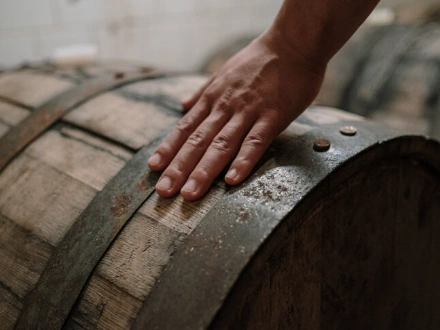
Every wine barrel has its own history — the scent of the wine that aged within it, the patina of the years, the unique grain of the wood. Creative Cooper transforms these authentic barrels into unique pieces of furniture: no two pieces are alike, and not a single piece is the product of a factory.

  • Handcrafted in Poland — along the historic Amber Road
  • Authentic wine barrels of European oak
  • Every piece unique — no mass production
  • Furniture, decoration and interior objects
  • Sustainable — the wood has proven itself over centuries
  • Living history in your interior
Contact us

Everything about Cupa Ars & wine barrels

What is the Cupa?+
The Cupa (Latin for 'barrel' or 'cask') was the standard storage vessel in the Roman Empire. The Romans discovered that wine aged better in oak barrels than in traditional amphorae — a revolution that changed the history of wine forever.
What is the Amber Road?+
The Amber Road was the most important trade route between the Roman Empire and the northern peoples — from the Baltic coast through present-day Poland, Czech Republic and Austria to Rome. Amber was the glamour product, but along the same route flowed timber, hides and barrels for the Roman frontier legions.
Why was amber so valuable to the Romans?+
Amber was the ultimate luxury material for the Romans. Its warm golden glow and magical properties made it coveted by the elite. Wealthy women had extravagant jewellery made from it. Emperor Nero was an avid collector. The Romans also believed in the healing powers of amber.
How did the Romans discover the wine barrel?+
After the conquest of Gaul, Roman soldiers discovered that the Gauls transported beer in oak barrels — less fragile and easier to stack than amphorae. They began using these barrels for wine and discovered that wine aged better. A chance discovery that changed the wine world forever.
Where is Cupa Ars furniture made?+
All Cupa Ars furniture is handcrafted in Poland by Creative Cooper — an artisan along the historic Amber Road, near Kraków. Every piece is unique, made from authentic wine barrels of European oak.
What makes wine barrel furniture special?+
Every wine barrel has its own history — the scent of the wine, the patina of the years, the unique grain of the wood. No two barrels are alike, and therefore no two Cupa Ars pieces are alike. You are not merely buying a table or chair; you are bringing a piece of living history into your home.
What does the name 'Cupa Ars' mean?+
'Cupa' is Latin for barrel or cask — the standard storage vessel of the Roman Empire. 'Ars' is Latin for art and craftsmanship. Together, Cupa Ars means: the art of the barrel, executed with the craftsmanship that the Roman tradition deserves.
“Your furniture is not modern. It is the culmination of a 2000-year-old route, from the Gaulish primeval forests and the Polish Amber Road to your interior.”
Cupa Ars · Emperor Designs · Holland